
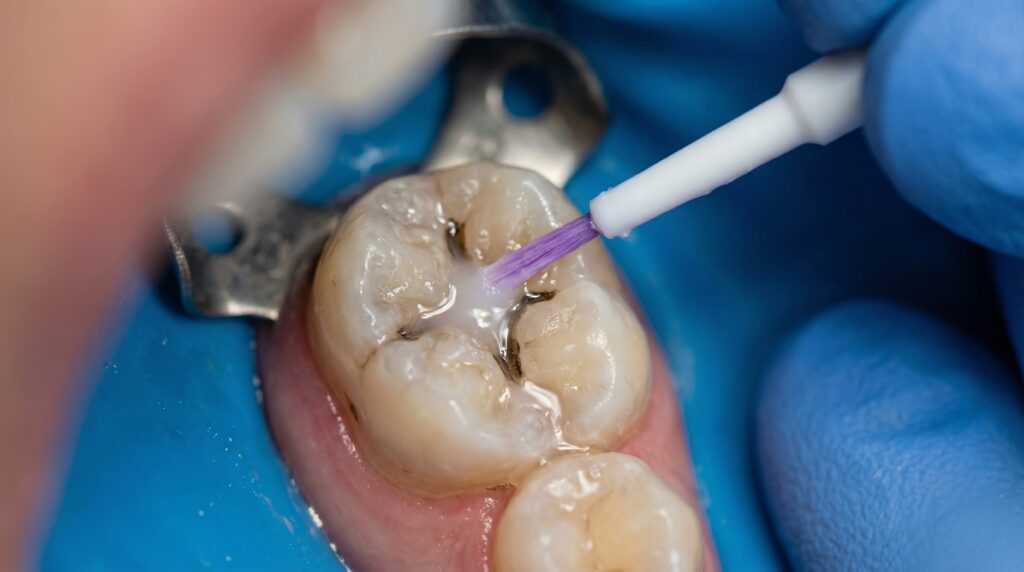
What Are Pit and Fissure Sealants?
Pit and fissure sealants are thin, protective coatings placed on the chewing surfaces of back teeth. Usually, dentists use them on molars and premolars. These teeth have grooves, called pits and fissures, where food and germs can get trapped. Because brushing may not always clean these areas well, sealants help keep teeth safe from decay.
How Do Pit and Fissure Sealants Work?
First, the dentist cleans the tooth. Then, they paint the sealant onto the grooves. After that, a special light hardens the sealant. As a result, the sealant forms a shield over the tooth. This barrier stops food and germs from settling in the grooves. Therefore, it lowers the risk of cavities.
Benefits of Pit and Fissure Sealants
Pit and fissure sealants offer many benefits. For example, they:Protect teeth from cavitiesAre quick and painless to applyLast for several years with proper careHelp save money by preventing dental treatmentsWork well for both children and adults
Because sealants are safe and effective, many dentists recommend them for tooth decay prevention.
Who Should Get Pit and Fissure Sealants?
Most often, dental sealants for children are suggested when their first permanent molars come in, usually around age six. However, teenagers and adults with deep grooves in their teeth can also benefit. If you have a history of cavities or struggle to clean your back teeth, sealants may help. In addition, people with special needs or those who have trouble brushing well should consider them.
The Procedure: What to Expect
Getting pit and fissure sealants is simple and painless. Here is what usually happens:The dentist cleans and dries your tooth.They apply a gentle gel to roughen the surface.After a few seconds, they rinse and dry the tooth again.The dentist paints the sealant onto the grooves.Finally, a special light hardens the sealant.
The whole process takes only a few minutes per tooth. You can eat and drink right after the procedure.
Aftercare and Maintenance Tips
Even though sealants protect your teeth, you still need good oral care. For best results:Brush your teeth twice a day with fluoride toothpasteFloss daily to clean between teethVisit your dentist for regular check-upsAvoid biting hard objects that could chip the sealant
Because sealants can wear down over time, your dentist will check them during visits. If needed, they can repair or replace the sealant.
Effectiveness in Preventing Tooth Decay
According to the CDC and dental studies, pit and fissure sealants can reduce the risk of cavities in molars by up to 80%. In fact, children without sealants have almost three times more cavities than those with sealants. Therefore, sealants are a proven way to help prevent tooth decay, especially in children and teens.
Common Myths and Facts
Myth: Sealants are only for kids.Fact: Adults can benefit too, especially if they have deep grooves.Myth: Sealants contain harmful chemicals.Fact: Dental sealants are safe and approved by health experts.Myth: Sealants replace brushing and flossing.Fact: You still need to brush and floss daily.
Potential Risks or Side Effects
Most people have no problems with pit and fissure sealants. However, in rare cases, a person may have a mild allergy to the material. Sometimes, the sealant may chip or wear away. If this happens, your dentist can fix it easily. Overall, the benefits far outweigh the risks.
When to Consult a Dentist
If you or your child have deep grooves in your teeth, ask your dentist about sealants. Also, if you have a history of cavities or want to know more about preventing cavities, a dental visit is a good idea. Your dentist can check if pit and fissure sealants are right for you and answer any questions you may have.
In summary, pit and fissure sealants are a safe and effective way to prevent tooth decay. They work well for both children and adults. Consult your dentist at Keerthi Dental Clinic to find out if pit and fissure sealants are right for you.